
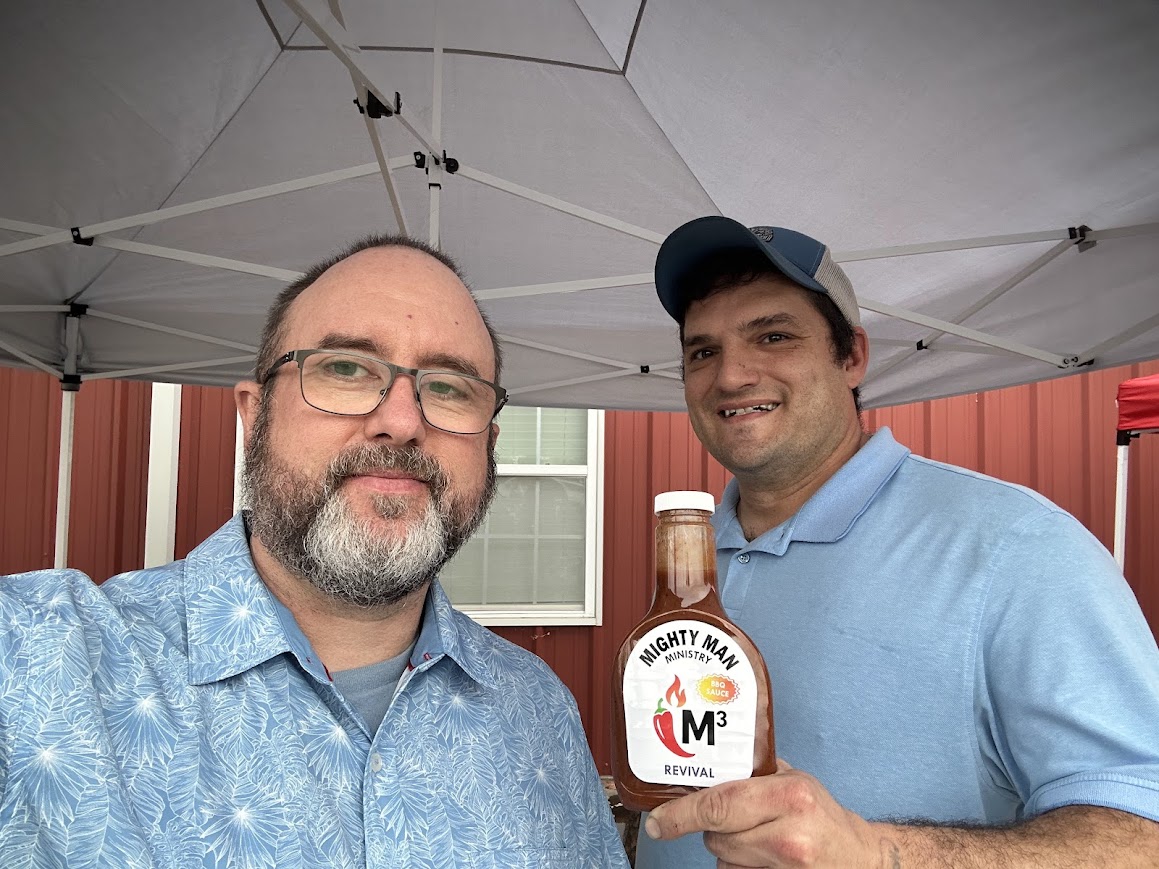
Rehabilitation is often discussed in terms of counseling hours, program phases, and relapse statistics. Those pieces matter. But anyone who has actually walked with men through recovery knows the deeper battle: rebuilding identity, restoring responsibility, and learning how to live on purpose when the old life still whispers. In that space—where belief meets behavior—work can become more than a paycheck. It can become a pathway.
That’s where M3 Industries stands out as a unique model. More than a set of businesses, M3 Industries functions as a rehabilitation ecosystem—one that merges structured work, mentoring, and mission into a practical daily framework that helps men rebuild their lives from the inside out.
Rehabilitation Needs More Than “Stopping”
Most rehab approaches focus first (and rightly) on stabilizing a person: detox, accountability, boundaries, routines, support systems. But after the crisis phase, a second challenge begins:
- How does a man live when he isn’t numbing himself anymore?
- How does he earn trust after years of breaking it?
- How does he learn to handle authority, pressure, boredom, money, and conflict without self-destructing?
This is where many people fail—not because they didn’t want freedom, but because they never developed the internal tools and external habits to sustain it.
M3 Industries answers that gap by turning daily life into a training ground.
What Makes M3 Industries Different
M3 Industries is built around a simple but powerful premise:
Real rehabilitation requires real responsibility—done consistently, in community, under guidance.
Instead of isolating recovery to a classroom or counseling session, M3 embeds growth into the normal demands of adulthood:
- showing up on time
- learning a skill
- taking correction
- serving customers
- managing emotions
- earning money honestly
- producing something valuable
- being accountable to a team
Those aren’t “extra” life skills. Those are the muscles of restoration.
The Therapeutic Power of Meaningful Work
Work isn’t automatically healing. But meaningful work—especially when paired with mentoring—becomes a powerful recovery tool.
Here’s why:
1) Work rebuilds identity through accomplishment
Addiction trains a person to see themselves as a failure, a burden, or a lost cause. But every completed job—every finished order, repaired vehicle, delivered product—quietly tells a different story:
“I can contribute. I can finish. I can be trusted.”
That shift is not motivational fluff. It’s identity repair.
2) Work creates structure when motivation is inconsistent
Early recovery is often unstable emotionally. A man may be sincere and still wake up discouraged, angry, depressed, or tempted. Structure can hold him when feelings can’t.
M3’s schedule, standards, and expectations create a steady rhythm that helps regulate:
- sleep habits
- focus and attention
- emotional reactivity
- impulse control
- perseverance
3) Work exposes character gaps—and gives daily chances to grow
A classroom can teach principles, but the shop floor reveals reality.
- How does a man respond when corrected?
- What happens when he’s tired?
- How does he treat people when he’s under pressure?
- Does he blame, avoid, lie, or take ownership?
M3 provides real scenarios where old patterns surface—and then offers coaching and accountability to replace those patterns with healthier ones.
Mentorship With “Skin On”
One of the most important parts of rehabilitation is consistent, credible mentorship. M3 Industries isn’t just about producing revenue; it creates proximity—men working alongside leaders who model:
- patience and firmness
- integrity in decisions
- excellence without arrogance
- discipline without shame
- truth spoken with love
That kind of day-to-day influence often becomes the difference between “information” and “transformation.” Men don’t just hear what responsibility is—they watch it, imitate it, and practice it.
A Built-In Community That Reduces Isolation
Isolation feeds addiction. Community challenges it.
In many recovery settings, community exists mainly in meetings. That’s good—but M3 expands community into the workday, where men learn to function with others in normal life:
- teamwork and communication
- conflict resolution
- honoring leadership
- carrying each other’s load
- taking initiative without controlling others
This is real social rehabilitation: learning how to belong without performing, manipulating, or withdrawing.
Vocational Training That Creates Long-Term Stability
One of the strongest predictors of long-term recovery is stability—especially employment stability. M3 Industries provides not just “busy work” but marketable trade exposure and entrepreneurial skills that can translate into life after the program.
Whether a man learns printing, automotive work, pallet operations, pressure washing, customer service, logistics, or sales fundamentals, he is gaining:
- skills that increase employability
- confidence in his ability to provide
- exposure to business systems
- understanding of stewardship and cost/value
- experience working under standards
This matters because many men relapse not in the moment of temptation—but in the slow pressure of hopelessness and financial chaos. Skill-building fights that hopelessness with a future.
The “Pay-It-Forward” Model
A unique feature of the M3 approach is that it can operate as a self-sustaining mission engine: participants learn, work, and contribute to something larger than themselves.
That does two powerful things in rehabilitation:
- It breaks entitlement.
Recovery isn’t “I deserve help.” It becomes “I’m being rebuilt so I can help rebuild others.” - It gives dignity.
Men aren’t just receiving—they’re contributing. They become part of the mission, not just a project.
Faith, Purpose, and Inner Transformation
For many men, the real turning point isn’t simply behavior modification. It’s encountering a deeper purpose—learning they are not defined by their worst season, and that redemption is not theory.
When rehabilitation includes faith-centered meaning and moral formation, it strengthens the internal foundation recovery depends on:
- conscience repaired (not just pain avoided)
- truth replacing excuses
- obedience replacing impulse
- humility replacing pride
- love replacing isolation
In that framework, work becomes worship—not in a sentimental way, but in a practical one: doing the next right thing because your life belongs to God now.
Measurable Outcomes and Visible Fruit
The impact of a model like M3 Industries can be seen in outcomes that go beyond sobriety alone:
- improved punctuality and discipline
- reduced antisocial behaviors (lying, blaming, manipulation)
- increased emotional regulation
- restored family trust over time
- employability and job readiness
- leadership development
- sustained community connection
- a renewed sense of calling and service
In other words, M3 doesn’t just aim for “not using.” It aims for becoming new—a full-life rehabilitation.
Challenges and Why They Matter
Any work-based rehabilitation model has challenges:
- Some men resist structure and authority at first
- Pressure can trigger old coping habits
- Work can expose insecurity and shame
- Growth requires consistency, not hype
But those challenges aren’t flaws—they’re the training. M3 doesn’t avoid the real world; it teaches men to live in it without returning to bondage.
Why This Model Matters Right Now
The rehabilitation world is full of programs that treat symptoms, manage behavior, or provide temporary safety. M3 Industries offers something rarer: a rehabilitation culture that builds a man’s internal world while training him to function in the external one.
It doesn’t just remove a man from the fire. It teaches him how not to walk back into it—by giving him structure, skills, mentorship, community, and purpose.
Conclusion: Rehabilitation as Rebuilding
Recovery is not merely the absence of addiction. It is the restoration of a man—his thinking, his choices, his identity, and his role in the world.
M3 Industries represents a practical, tangible approach to that restoration: men are taught to work, to serve, to submit to process, to develop character, and to build a future. And in doing so, rehabilitation becomes more than survival.
It becomes transformation.
Leave a Reply